
As Space to Grow makes clear, community gardens are far more than patches of green they are crucial spaces helping people stay connected, healthy, and hopeful. This report is a reminder of what’s possible when people come together to nurture land and each other and a call to ensure these spaces are protected so future generations can enjoy the many benefits they bring.
Space to Grow: a spotlight on a nation of community gardens
The RHS has recently launched its Space to Grow report, a national research project mapping the impact, scale, and needs of more than 2,000 community gardens across the UK.
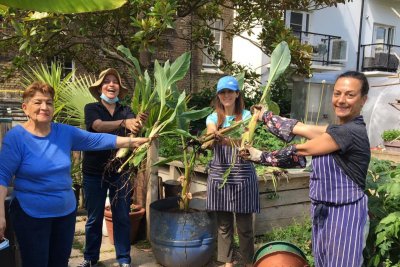 Enthusiastic volunteers from all walks of life get together in the garden. Copyright: Calthorpe Community Garden
The report celebrates the incredible diversity of these spaces, from school and allotment plots to health centres and container gardens on housing estates. While most community gardens are based in urban areas (76%), a quarter are in rural settings too.
Rachel Dring, Capital Growth Coordinator at Sustain says,
"We're really glad to see in this report that 61% of gardens are growing food. With the rising prices and access barriers for organic fresh produce, growing your own is a wonderful way to eat local and healthily."
What do growing sites offer the community?
Space to Grow illustrates that these sites aren’t just there to grow plants but also provide a space to bring communities together, supporting mental and physical wellbeing as well as encouraging growing skills. At a time were 88% of 18-24 year olds are lonely and half of the population feels disconnected from society, community growing provides is an important space for healing and connection to both people and nature.
This is beautfully illustrated by this video of Camberwell Triangle Garden, in South East London, which shows how gardening brought together this Camberwell community, allowing neighbours who didn't know each other to form strong connections, tackle challenges together and make the most of their shared green space.
What are the challenges facing community gardens?
The report also demonstrates the wide spread nature of community growing, with over 2.5 million adults taking part in their local gardens over the last three years and 14.7million more saying they would love to get involved. But the research also reveals the very real challenges facing growers with many worried about funding, losing access to land and the need for more support and skill development. Whilst they provide such an essential service, almost a third of gardens operate on less than a staggeringly low £500 per year. Only 3% of gardens own their own sites, and there is a lack of access to water as well as accessible toilets and storage.
What help is needed to sustain community growing sites?
The report not only touches on these issues but provides recommendations on how different sectors can help support community gardens:
- National Governments: embed community gardening into national planning and environmental policy as essential green infrastructure
- Local Governments: adopt or integrate community gardening and Right to Grow principles into local strategies
- Organisations supporting community gardening groups: collaborate on shared advocacy, networking, and skills development to strengthen the movement
- Funders: adapt funding criteria and processes to be more inclusive, flexible, and sustainable for community gardens and their supporting networks.
With these suggestions, the RHS hopes that community gardens are able to successfully flourish, gaining a long term sustainability that will allow growers to grow, instead of worrying about security and funding.
Rachel Dring, Capital Growth Coordinator states
“This timely report shows how widespread and popular the community garden movement it. With so many challenges to accessing land for growing and greening, we welcome the recommendations for greater support, funding and recognition of the many benefits of community gardening, including widespread adoption of the Right to Grow”
Find out more about the Space to Grow.
25/11/2025


Support our work
Your donation will help communities grow more food in gardens across London.
Capital Growth is a project of Sustain: the alliance for better food and farming.
London is Good to Grow: local food gardens open to the public this April
Grassroots campaigners are victorious as Hackney Council passes the Right to Grow
Right to Grow’s on the ballot: the More Natural Capital local election pledges