
The Big City Bug Hunt: get spotting!
Join the London-wide citizen science campaign and help record biodiversity in food growing spaces. Together let’s prove that edible gardens are an important part of urban nature.
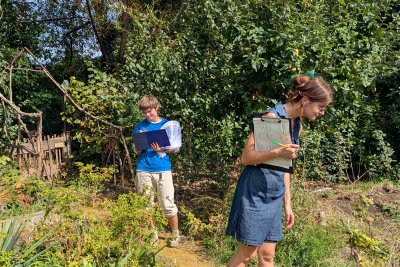 Bug hunters Sara and Melina at Christchurch Community Garden. Credit: Lula Wattam
We know London’s urban food-growing spaces don’t just nourish people, they provide essential homes for birds, bats, butterflies, beetles, bees, and so many other species. But we need the data to prove it- will you help?
According to the Natural History Museum, UK's flying insects have declined by 60% in 20 years. That’s why Capital Growth, in partnership with Greenspace Information for Greater London (GiGL) and iNaturalist, launched The Big City Bug Hunt- to record and celebrate insect life in the city’s growing spaces.
Ready to dig in? Here’s why it matters
Food-growing spaces are often overlooked in conversations about nature recovery, but they play a crucial role in supporting biodiversity. By taking part, you’ll help build the evidence needed to protect these spaces, unlock funding, and influence local policy and planning.
Your observations will feed into GiGL, strengthening London-wide data on urban nature, while also helping you better understand the wildlife at your own site.
By signing up, you can:
- Explore the biodiversity right on your doorstep
- Record and identify species using iNaturalist
- Track and understand your site’s impact on wildlife
- Build evidence to support and protect your growing space
- Contribute to a London-wide map of urban biodiversity
Download our Big City Bug Hunt Toolkit
How does all the data get collected?
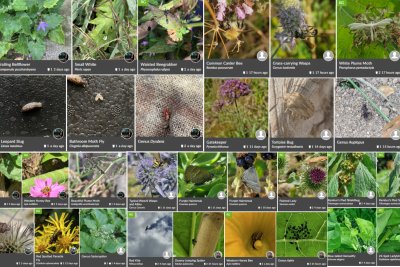
When you register your garden with us, we set it up as its own recording project, just like this. This means you can see all the different species that people record specifically within your garden. All records made in the garden, regardless of whether they have joined the project will pop up. How neat is that?
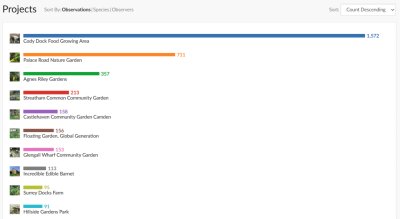
All of these records also feed into our wider Capital Growth project, designed by GIGL, which brings together data from every community garden registered with us. There, you can explore species information across all sites and see how different gardens compare.
There’s even a leaderboard showing the gardens with the most recordings, so if you’re feeling competitive, start recording now!

Big City Bug Count weeks!
We want people to record bugs regularly and hope it becomes part of ongoing volunteering days. Alongside this, we’ll also be supporting gardens to run special Big City Bug Counts during key weeks of the year, in April, June, and September, to help us gather lots of data. We have also hired “Critter Consultants” to run Big Bug Hunts in gardens, so if you are interested in receiving a free biodiversity workshop, email lula.wattam@sustainweb.org for requests.
Whose registered so far?
Here’s a list of all the gardens registered as biodiversity monitoring hotspots- is your site not there yet?
Register now and join our efforts to track biodiversity.
(Updated 23 July 2026)
Want to learn more about citizen science monitoring and London's insects?
Check out our Big City Bug Hunt resources
If you have any questions about the project or help getting set up, contact lula.wattam@sustainweb.org. For more information about GIGL you can visit their website here and for any FAQ's about iNaturalist click here.


Support our work
Your donation will help communities grow more food in gardens across London.
Capital Growth is a project of Sustain: the alliance for better food and farming.