
SEWN East: growing connections and dreams in East London
Wondering what happens when you ask 30 food growers to imagine a greener, more edible urban landscape?
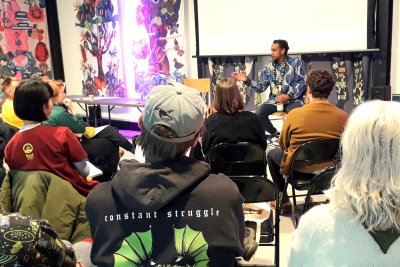 Solomon Kawall of May project Gardens giving a talk at SEWN East. Credit: Rachel Dring
At SEWN East, the East London gathering of Capital Growth’s regional networking series, that’s exactly what we found out.
SEWN Together is Capital Growth’s London-wide food growing event series that brings people together from across the city- from grassroots growers and community organisers to network leads and council officers. The aim is to spotlight the brilliant work happening across boroughs, share knowledge, and collectively problem-solve to support more resilient and inclusive growing communities.
Hosted at the fantastic Cody Dock, an ecology centre on the tidal Lea, we had a great turnout from gardens and groups across the boroughs including Newham, Waltham Forest, Greenwich, Hackney, Tower Hamlets and Barking & Dagenham, with a couple of star appearances from Merton and Lambeth. It was wonderful to see so many representatives in the room from different corners of the region.
The day featured a range of presentations that sparked conversation and ideas:
- Our very own Rachel Dring from Capital Growth kicked us off with an insightful session on the Right to Grow, exploring what this means for local authorities, communities, and the city; including how to access helpful resources and join the movement via the WhatsApp group.
- Carmen Ho who is involved in the Right to Grow Tower Hamlets, shared details of the borough-level campaign, walking us through how grassroots organising can mobilise communities. From Roots and Routes walking tour engagement tools to an ongoing public petition, and banner making workshops.
- Solomon, the CEO of May Project Gardens, followed with a moving piece of spoken word that brought to life the systemic barriers to sustaining and funding a community garden project, especially for neuodivergent folks. He then gave a whilststop tour of their innovative sustainable city living programme and eco-building project. His talk showed how creative arts and food growing intersect to make real community impact, especially in youth engagement.
- Emma Myers drew on her work at Homerton Hospital and as a horticultural therapist, shared practical tips for making gardens more inclusive. From wheelchair-accessible raised beds to sensory activities, there were lots of ideas to take back to our own sites.
- Recognising the persistent challenge of sustainable funding for growers, Eoin from Integrate Agency offered a session on how to fundraise for gardens, with actionable advice on funding streams and smart strategies for securing income.
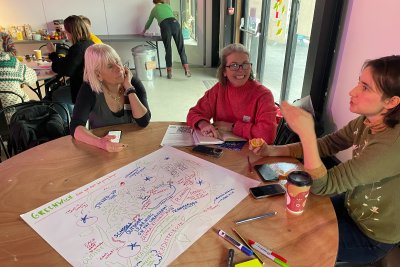
In true SEWN Together style, we embarked on a creative workshop session where participants imagined and drew what food growing in London could look like in the future. Through sensory prompts and collaborative dreaming, one clear agreement emerged: if everywhere smelled like tomatoes, that would be ideal! Other dreams of every school having a kitchen garden; having care at the centre of our practice and politics; and community asset ownership of our sites also emerged.
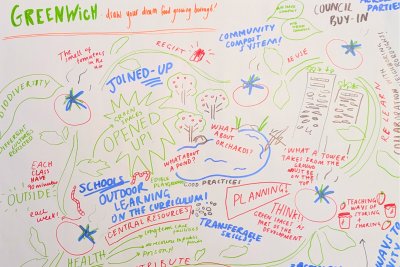
From these visions, we explored practical actions and best practices that could help make these futures a reality.
From our conversations, a series of recommendations emerged:
For councils:
- Create dedicated food growing coordinator/officer roles to support funding and project development
- Commit to passing the Right to Grow motion
- Align food growing with broader council strategies and policies
For growing communities:
- Clarify who the growing groups and networks are in each borough
- Establish community plant nurseries to supply growing sites
- Host monthly community-led networking sessions on food growing and land access
- Create or connect with tool libraries and woodworking workshops to support bed building and site maintenance, such as the Woodshop of Recycled Delights
- Support the Right to Grow campaign - join the London Right to Grow mailing list
- Collect data on the impact of growing sites, so groups can make evidence-based cases for support
If you are a community group or council that wants to take these next steps, don’t hesitate to get in contact with us for advice.
If you couldn’t make it but want to get involved in food growing in your borough, here are some helpful links:
- Hackney has the Union of Hackney Gardens, a lively WhatsApp group
- Rosie Grosie from Newham has created a map of all sites in the borough
- Greenwich has a network of gardens in Growing Greenwich
- The Food Growers Network in Waltham Forest support growers and the Right To Grow campaign
- The Women’s Environmental Network helps host the growers' network in Tower Hamlets and you can join the local branch of Right to Grow
We are so grateful for everyone who attended, it’s wonderful to be able to have these conversations face to face and in person, everyone left inspired and hopeful for what the movement can achieve. We are excited to see what emerges from these discussions and look forward to our next SEWN event, which will be happening in West London early 2026. If you have any projects or ideas you would like to present, let us know.
17/12/2025


Support our work
Your donation will help communities grow more food in gardens across London.
Capital Growth is a project of Sustain: the alliance for better food and farming.
London is Good to Grow: local food gardens open to the public this April
Grassroots campaigners are victorious as Hackney Council passes the Right to Grow
Right to Grow’s on the ballot: the More Natural Capital local election pledges