
Big City Bug Hunt: pond dipping guide
Got a pond? Get dipping! Explore our step-by-step guide to help you and your volunteers take part our Big City Bug Hunt citizen science project by running a pond dipping activity.
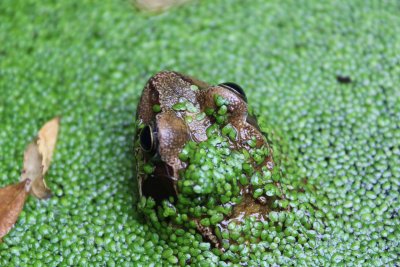 Frog's head emerging from pond covered in duckweed. Credit: Rose Williams | FrogLife
In partnership with Greenspace Information for Greater London (GiGL) and iNaturalist, The Big Bug Hunt is a London-wide project celebrating the insects living in food-growing spaces across the city. By running a pond dipping session, you can get up close with nature, discover what’s lurking in your growing space, and help build a better picture of London’s biodiversity, all while taking part in a fun and easy citizen science activity.
Ponds are incredible habitats for both water-based and land dwelling creatures. Curious to see what’s living below the depths? Follow our pond dipping instructions.
This activity focuses on invertebrates and amphibians, as they are common and easy to spot in the watery world, but feel free to discover and record the wide range of critters you find in your garden.
Before starting your pond dip make sure you are registered to our Big City Bug Hunt project, check out the instructions here.
Pond dipping activity guide:
Equipment you need: Pond dipping net (or a kitchen sieve), white trays (or clean margarine pot), collecting pot and of course your phone with iNaturalist.
Methodology:
- Put some pond water in your tray (not tap water!)
- Swish your net in a figure of eight in the pond. Take it out of the water and turn the net upside down in your tray and swish the net around so the insects transferred into the tray- careful none are left behind!
- Let the water settle and start to look at what you have collected. You can use the pots to catch bugs you want to look at closely.
- Take a photo and submit the record to iNaturalist.
- Once you have finished identifying the creatures tip the water and the creatures in the tray back into the pond. Do this by submerging the tray under the water before turning it upside down.
- Clean and dry the equipment well.
If you want to explore the land loving insects of your community garden- check out our activity guide on bug hunting.
This April, we’ll be syncing our Good to Grow London–wide food growing festival with the Big City Bug Hunt, so be sure to sign up and get involved in the festival.
If you have any questions about the project or help getting set up, contact lula.wattam@sustainweb.org. For more information about GIGL you can visit their website here and for any FAQ's about iNaturalist click here.
05/02/2026


Support our work
Your donation will help communities grow more food in gardens across London.
Capital Growth is a project of Sustain: the alliance for better food and farming.
London is Good to Grow: local food gardens open to the public this April
Grassroots campaigners are victorious as Hackney Council passes the Right to Grow
Right to Grow’s on the ballot: the More Natural Capital local election pledges